Canada posts record $14 billion budget surplus

Thursday, September 27, 2007

Canada has a budget surplus of CA$13.8 billion for the 2006–2007 fiscal year, totaling 1% of Canada’s gross domestic product (GDP), Finance Minister Jim Flaherty announced today. The record surplus was boosted by revenue from government corporations to $14.2 billion, far exceeding the government’s projections of $9.2 billion and surpassing the record set by the previous year’s $13.2 billion surplus.

By federal law, all surplus must be used to pay down Canada’s debt, and is not available for spending. $90 billion in debt payments over the last ten years have reduced its debt to $467 billion or 32.3% of national GDP, its lowest level in a quarter century. The announced debt payment is the largest in Canadian history.

The payment also reduced Canada’s annual interest payments by $725 million, which the government pledged to pass on to taxpayers through tax returns and reduced income taxes. The Conservative’s “Tax Back Guarantee”, proposed in the March budget, promises that money saved on interest payments will be deducted from Canadians’ taxes. The Globe and Mail predicts the tax returns will be 30–40 dollars per taxpayer.

Canada has posted ten consecutive budget surpluses in the last decade. The Canadian economy, the 8th largest in the world, has benefited from rising global demand for its export commodities, particularly oil and copper, as well as record corporate profits. This surplus was further increased by a $700 million drop from expected government spending.

Prime Minister Stephen Harper cautioned that the Canadian economy is still facing “tough times” in its forestry, manufacturing, and some export industries. Critics point out that the Conservative government had said Canadians were overtaxed when they took office, and had vowed to eliminate “surplus surprises”.

Retrieved from “https://en.wikinews.org/w/index.php?title=Canada_posts_record_$14_billion_budget_surplus&oldid=1048745”

Category:Cannabis

This is the category for cannabis, a drug with recreational and medicinal uses.

Refresh this list to see the latest articles.

  • 16 February 2018: United States: Berkeley, California declares itself a sanctuary city for recreational cannabis
  • 16 April 2017: Canada to legalise marijuana to ‘make it more difficult for kids to access’
  • 20 January 2017: Germany legalises medical use of cannabis
  • 12 January 2017: Artist who changed Hollywood sign to ‘Hollyweed’ surrenders to authorities
  • 3 January 2017: Hollywood sign modified to read ‘Hollyweed’
  • 31 December 2016: Helsinki court jails anti-drug chief Jari Aarnio for drug smuggling
  • 4 May 2014: First arrests made in Singapore for possession of New Psychoactive Substances
  • 22 April 2014: Glasgow cannabis enthusiasts celebrate ‘green’ on city green
  • 2 December 2013: Police report drug haul seizure worth up to £30 million in Brownhills, England
  • 5 June 2013: Scottish court jails Joseph Kearins for culpable homicide of Jordan McGuire
?Category:Cannabis

From Wikinews, the free news source you can write.


Sister projects
  • Commons
  • Wikidata
  • Wikipedia
  • Wikiquote
  • Wiktionary

Pages in category “Cannabis”

Retrieved from “https://en.wikinews.org/w/index.php?title=Category:Cannabis&oldid=4275683”

Strongest earthquake in 40 years hits Southeast Asia

Sunday, December 26, 2004

Indian Ocean – The death toll continues to grow and millions face a homeless life in the new year as coastal communities in south Asia struggle against continued aftershocks and flooding caused by the largest earthquake to strike the planet in more than a generation.

The magnitude 9.0 undersea megathrust earthquake struck off the western coast of Sumatra, Indonesia on December 26, 2004, at 00:58:50 UTC (or 07:58:50 local time in Jakarta and Bangkok).

The earthquake was the strongest in the world since the 9.2-magnitude Good Friday Earthquake which struck Alaska, USA in 1964, and the fourth largest since 1900. More than 140,000 deaths[1] were caused by resulting tsunami, which in Thailand were up to 10 meters (33 feet) tall, and struck within three hours of the initial event.

Multiple tsunamis struck and ravaged coastal regions all over the Indian Ocean, devastating regions including the Indonesian province of Aceh, the coast of Sri Lanka, coastal areas of the Indian state of Tamil Nadu, the resort island of Phuket, Thailand, and even as far away as Somalia, 4,100 km (2,500 mi) west of the epicenter.

While the earthquake and the tsunamis are no longer ongoing (other than aftershocks), the humanitarian and economic crisis generated by the disaster is still ongoing. This report will attempt to cover the crisis as it continues to develop.

Retrieved from “https://en.wikinews.org/w/index.php?title=Strongest_earthquake_in_40_years_hits_Southeast_Asia&oldid=4539688”

Find Quality Computer Repairs And It Services In Brisbane And Gold Coast

Find Quality Computer Repairs and IT Services in Brisbane and Gold Coast

by

Nathan Horrocks

With the turn of the decade, we have seen the rise of numerous computer repair stores and IT services in Brisbane, Gold Coast as well as other parts of Australia. Computers have become so common these days that it is quite easy to find these services quite easily. However, before you go for computer repairs Brisbane or computer repairs Gold Coast, there are few things you can do from your side as well. First and foremost, figure out if the problem you are facing is hardware related or not. This will make it much easier to find the right kind of computer repair store.

[youtube]http://www.youtube.com/watch?v=1UtIfJpnCbs[/youtube]

Finding IT support Gold Coast; or for that matter any other computer service in Australia is not that difficult. Just run a search for the best computer repair services and stores in your city and you will get a long, detailed list of these service providers. In fact, many of these websites also rate these computer repair stores and IT services according to research. This is a good enough pointer if you are looking for a decent service. These websites also provide phone numbers, addresses, email ids and various other details about these stores. However, just settling for the first name that pops up is not good enough. If you are looking for the best IT support and computer repairs Brisbane and Gold Coast, make sure you take a close look at more than a couple of websites. Pick the names that appear to be common and also read a few testimonials and reviews about these stores. This will give you a better perspective of how good or bad the store is. Make sure these testimonials sound genuine and not made up by the review website itself. Many websites do this because they may have not spent any time actually researching the service. Once you zero down on the service, make sure you speak to someone from the company before going for repairs. The following are a few details you can get before selecting the service: — Find out if you have to take your system to the store for repairs or can they send a technician to your home or office to fix the problem. If they agree to send a technician, enquire about extra service charges. — Try and get a clear idea of what exactly the problem is before you give you system for repairs. — Find out if they will be required to replace any parts or not. If they do have to replace a part, find out how much it will cost you. Make a few online comparisons for the part before you commit to anything. — Try and get a rough quote of how much the services will cost you. Make sure you get the best possible deal. Once you do your part in this respect, you can be rest assured that you will get good quality services. A certified and reputed service is also a better pick in this case. For more info please visit : http://www.monsterit.com.au/

Finding

IT support Gold Coast

or for that matter any other computer service in Australia is not that difficult. If you are looking for the best IT support and

computer repairs Brisbane

and Gold Coast, make sure you take a close look at more than a couple of websites.

Article Source:

ArticleRich.com

Beijing cracks down on manhole cover thefts

Tuesday, March 15, 2005

Beijing’s utilities are cracking down on manhole cover thefts by removing the incentive to steal them. A pilot program is using a new material with negligible recycling value in over 2,921 installations of various types.

“We are still looking for the perfect substitutes for the manhole covers,” said city spokesman Wang Xin.

Over 240,000 covers were stolen from Beijing’s streets in 2004, nearly half of the 600,000 installations scattered throughout the city.

The high recycling value of the metal used to manufacture the previous models led to a crime wave of thefts, driven by illegal scrap metal dealers who purchased them for approximately US$2.4 dollars.

The covers cost between US$145 and US$182 to replace.

Retrieved from “https://en.wikinews.org/w/index.php?title=Beijing_cracks_down_on_manhole_cover_thefts&oldid=4459586”

The Deadliest Fall

18 December 2004

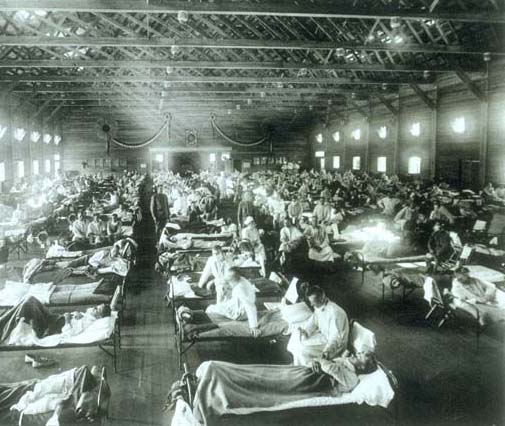
Emergency hospital during 1918 influenza epidemic, Camp Funston, Kansas (source: National Museum of Health and Medicine, AFIP).

A bout of the flu can be mild. In young, healthy adults, many infections pass unnoticed. But sometimes the influenza virus evolves into a strain that decimates its victims. The worst known strain swept the world in the Fall of 1918, infecting 500-1000 million and killing 40-100 million, about 2-5% of people.

There are several theories about where the pandemic began, but the likeliest origin was in Haskell County, Kansas, in the United States. People in the sparsely populated county, where farmers raised pigs, poultry, cattle, and grain, began suffering from influenza in late January 1918. Unusually for flu, it was young, healthy adults who were hardest hit. Victims fell ill suddenly, many progressing to pneumonia and dying, often within days. Within weeks, however, the epidemic ended. The natural geographic isolation of this community normally might have contained the fatal flu in a sort of unintentional quarantine, but the First World War intervened. Men were uprooted from their home towns and congregated in huge numbers in army camps for training and then shipping out to other camps or to fight in Europe. The destination for men from Haskell County was Camp Funston, part of Fort Riley, Kansas, where the first influenza case was reported in early March. As soldiers moved among camps, the virus spread. Within two months, the epidemic spread to most of the army camps and most of the largest cities in the United States. As American soldiers went to France, so did the virus, spreading first from the port of Brest.

The flu then spread worldwide. The pandemic reached its height in the Fall of 1918. Spain was affected early, and because Spain was not fighting in the World War, there was no wartime censorship, and news of the outbreak became widely known, leading to the flu being called the Spanish Flu in many countries. In Spain, however, it was called French Flu or the Naples Soldier. In India, about 12 million people died of flu. In some US cities, people died so quickly that morticians couldn’t cope with the bodies. According to Jessie Lee Brown Foveaux, who worked in the Fort Riley laundry during the epidemic: “They were piling them up in a warehouse until they could get coffins for them.”

The disease started with cough, then headache. Temperature, breathing and heart rate increased rapidly. In the worst cases, pneumonia came next, the lungs filling with liquid, drowning the patients and turning them blue from lack of air. Patients bled from every orifice: mouths, noses, ears, eyes. Those who survived often suffered temporary or permanent brain damage. Several million developed encephalitis lethargica, in which victims were trapped in a permanent sleeplike and rigid state, as portrayed in the 1990 movie “Awakenings.” In others, normal thought processes were impaired. During negotiations to end World War I, US President Woodrow Wilson was struck with flu, and people around him noted that his mental abilities never fully recovered. The French leader George Clemenceau had wanted harsher punishment of Germany than Wilson had desired. Clemenceau may have convinced Wilson in his weakened state to accept such harsh terms, which may have been one of the factors causing World War II.

Since flu is highly contagious early in the illness, even before symptoms appear, strict quarantine may be necessary to stop its spread during an epidemic. Australia kept its 1918 flu death rate relatively low by enforcing quarantines. However, in many parts of the world, public health officials hesitated to impose such measures, giving the disease time to gain a foothold. In the US city of Philadelphia, a rally of half a million people was planned in September 1918 to sell bonds to fund the war, at just the time when the flu started to infect residents. Although doctors warned the public health director to cancel the rally, he wanted to meet the city’s quota to raise money for the war and refused to cancel the event. Within days after the rally, half a million city residents caught the flu.

Why was the 1918 flu so deadly? The influenza virus wasn’t preserved at the time of the outbreak, at least on purpose. But in the late 1990s researchers Ann Reid, Jeffery K. Taubenberger, and their colleagues extracted and sequenced the genetic material of the virus, RNA, from tissue of victims who died in the pandemic. They used bits of lung that were preserved in formalin from victims on army bases or from victims buried in permafrost in the Alaskan village of Brevig Mission, where flu killed 85% of adults. Comparisons with known flu viruses in humans, pigs, and birds suggest that some genes of the 1918 virus came from birds or an unknown animal source. Other scientists then were able to show that the amino acid sequence of hemagglutinin protein from the 1918 virus had several changes from other flu viruses that may have helped it to easily bind and invade human cells, and that made the virus look different enough from earlier flu virus strains that people had no immunity.

The possibility exists that another flu pandemic will sweep the world like the one in 1918. In 2004, an H5N1 influenza virus has killed millions of birds and at least 30 people in southeast Asia. So far this virus strain has not evolved the ability to pass directly from human to human, but that possibility becomes more likely as the bird flu pandemic continues and humans remain in contact with chickens, ducks, and other birds. The virus has killed two-thirds of people reported to be infected. Dr. Tim Uyeki, an epidemiologist for the US Centers for Disease Control, says, “you have the ingredients in Asia right now for a public health disaster.”

But since sequences of this bird flu virus are known, it may be possible to develop a vaccine or set of vaccines to protect against it. At a special meeting of influenza experts on November 11th and 12th, World Health Organization influenza program chief Klaus Stohr said, “It is not only possible, but also important, that influenza pandemic vaccines be made available… and there’s a shared responsibility needed to make that happen…. We have a huge window of opportunity now.”

Retrieved from “https://en.wikinews.org/w/index.php?title=The_Deadliest_Fall&oldid=2526338”

Study says dogs can smell lung and breast cancer

Monday, August 7, 2006

Dogs can be trained to detect early and late stages of lung and breast cancer accurately according to a study published by California scientists in the little-known scientific journal Integrative Cancer Therapies.

The study took place over the last five years at the Pine Street Foundation, a non-profit organization which conducts evidence-based research on integrative medicine (combining complementary and alternative medicine and mainstream medicine). Michael McCulloch and colleagues used three Labrador Retrievers and two Portuguese Water Dogs, both common pets, that received basic behavioral dog training. The researchers trained the dogs to lie down next to a sample from a cancer patient and to ignore other samples.

The samples used were breath samples from 55 patients with lung cancer and 31 with breast cancer — the two types of cancer with the highest mortality rates in the United States.

After the training phase, the dogs’ accuracy diagnosis was tested in a double-blind experiment. Among lung cancer patients, the sensitivity and specificity were 99% accurate and for breast cancer sensitivity was 88% and specificity 98%. Because these figures seem almost too good to be true, cancer experts are the same time baffled and skeptical. The authors of the study themselves also say replication of the study is needed.

Importantly, this was independent of the cancer stage, meaning the dogs were able to pick up the scent of cancer in its early stages. This is important because in many cases, the success of any treatment depends on early diagnosis. However, the researchers don’t believe this will lead to the use of dogs in the clinic soon, rather they want to find out which chemicals are actually sensed by the canines, because they could be used in laboratory assays. “It’s not like someone would start chemotherapy based on a dog test,” Dr. Gansler of the American Cancer Society said, “They’d still get a biopsy.”.

The researchers were inspired by anecdotal reports about dogs detecting cancer. In 1989, a British women consulted with her family physician because her Dalmatian kept licking a mole on her leg. At biopsy it showed to be malignant melanoma. When diagnosed too late this form of cancer has a poor survival rate, but in this case early surgery was made possible, and the women survived. Prior studies showed that breath samples from patients with lung cancer or breast cancer contain distinct biochemical markers. This provides a basis for the hypothesis that some cancer types produce volatile chemicals that dogs could smell. A study published in the British Medical Journal already proved that dogs could use their exquisite sense of smell to detect bladder cancer in urine samples, but they were only correct in 41% of cases, and another study provided preliminary evidence that dogs could detect melanomas.

This doesn’t mean you can show your breasts to your dog and it will tell you if you have cancer, other physicians caution, and scientists do not advise people to train their dogs to sniff for cancer. Unresolved issues from the study include the fact that subjects were required to breathe deeper than normal, so it’s not sure whether dogs can smell cancer in normal breath. Also, whether this is a permanent skill that would be retained by dogs was not tested.

Finally, there are concerns that could arise over liability issues: who would be responsible when the dog makes a mistake?

Current detection methods for both lung and breast cancer are not flawless. For lung cancer, chest X-ray and sputum cytology (detecting cancer cells in coughed up fluid) fail to detect many early cases, and CT scan produces many false-positive results unless combined with expensive PET scans. Although it might be comparing apples and oranges, a $2.5 million CT scanner has an accuracy of 85 to 90%. Mammography also produces false-positive results, and it may be difficult in women with dense breast tissue. As such, another type of “pet”-scan, using dogs as a biological assay, might prove feasible for screening if supported by further research. Current tests are also expensive so the use of dogs for preliminary cancer testing could prove to be an affordable alternative for countries in the developing world.

Retrieved from “https://en.wikinews.org/w/index.php?title=Study_says_dogs_can_smell_lung_and_breast_cancer&oldid=798579”

What Are The Advantages Of 360 Degree Performance Appraisal?

By Margaret W. Wilson

The most common benefit through the performance evaluations of the self is an indispensable part of

360 degree feedback

and

360 degree performance evaluation feedback

that the high involvement of workers and the stronger impact on behavior. It is likely that your changes the process of internal and external communication,

performance evaluations

,

360 feedback

represents the process that generates to improve performance in our workplace and a company that

improves employee performance

. Through a lot of observations, recognizing that some people think that an evaluation of it as a performance management process, but in reality it is not, the

360 performance evaluation

mechanism is thought human resources to examine the potential for human companionship.

The most important benefits of performance evaluations of

[youtube]http://www.youtube.com/watch?v=X7QrV1Ng8uo[/youtube]

360 degree

are some ideas that are used to evaluate how effective are the exclusive work is also important for the business and the vital role of any company or organization cribs. Whenever the performance improvement as well as the opportunity to drive the company’s current training, increases worker motivation and can have a positive hit in areas such as customer service.

360 degree feedback performance evaluation

process is useful because it identifies weaknesses and strengths of each employee who is in the workplace. In general, the development of both collective and individual level,

360 degree feedback

assessments can be an important part of performance management. The feedback from

360 performance appraisals

also includes the preparation process as; benefit customers and ultimately, so the conclusion of the company and gives the worker a vision board performance is the variety of sources and the possibility of identifying the strength and weaknesses.

Using of

360 degree

offering a broader view of employee performance. The most obvious benefit of the

360 degree assessment

is its ability to corral a number of comments from customers, because every client offers a new vision, one that produces a more complete picture of performance of employee, Unlike the skins of the supervisors of workers as in

360 degree evaluations

, because peers know their best behavior and insists on more valid ratings. In addition to providing a broader perspective, the

360 degree feedback

evaluation provides greater worker self-development. That allows a worker to compare their own perceptions with the perceptions of others in the skills of workers, styles, and performance.

The advantages of

360 degree feedback

perceptions is based on reality and this process helps the individuals comprehend how other people perceive them, uncover blind spot, the feedback is critical for studying, some other people advantages from

360 degree

are like:

It supports teamwork by involving team members within the development process

It is also used in the organization that reinforced the corporate cultural by linking survey items to organizational leadership competencies and corporation values.

Improves the customer services by having clients contribute to the evaluation procedure.

Commonly the

360 degree feedback

may be the new and effective observation tool in generating the feedback that lead to the behavioral alter and gives the superior result. It can be mostly be observed that the benefit exactly where is much more taken, while the

360 feedback

administration utilized to be the incredibly complex along with the advancement on location it makes as the surveys administration as effortless as working with a word processing program. It makes the individuality of the business enterprise extra prominent those make it preferred and quick to communicate.

About the Author: Cr360.com is a UK based company that offers customisable online

360 Degree Feedback

tool. Cr360.com helps you to administrate and implement

360 Feedback

in any kind of business. Which is help full to increase performance of an organization. Cr360.com’s 360 degree evaluation service is not only popular in United Kingdom but it is popular in all Europe and Internationally.

Source:

isnare.com

Permanent Link:

isnare.com/?aid=922518&ca=Business+Management

Britain’s “Grey Train Robbery” solved

Thursday, November 16, 2006

Two elderly women whose CCTV pictures were shown in newspapers across the UK on Thursday after they were caught on camera stealing a bag at a railway station in Sunderland have turned themselves in.

The police has announced that women admitted the offence and have received an official caution in a case variously dubbed the “Grey Train Robbery” and “Gran Larceny.”

The women contacted police services after the case received major newspaper and media coverage under headlines such as “Nans on the Run” and “Artful Codgers.”

A security camera image released by police showed two grey-haired women, in their 60s or 70s, wearing knee-length skirts, white blouses and overcoats at Sunderland station.

Police had appealed for help in finding the women after a student’s bag was stolen from a station platform.

“They handed themselves in,” police announced in a statement. “They subsequently were interviewed and admitted the offence. Both received police cautions.”

Retrieved from “https://en.wikinews.org/w/index.php?title=Britain%27s_%22Grey_Train_Robbery%22_solved&oldid=567131”

Book Fair 2.0; On bloggers, ebooks and pirates

Friday, October 12, 2007

The Internet is very much present at the Frankfurt Book Fair 2007, not just, like in previous years, as a means for the journalists who have 80 workplaces for their own notebooks to report on the fair, but like before as a chance – and as a threat for rights-owners of digital media.

After a marginal existence in the previous year, bloggers have got their own “living room 2.0” at the fair, furnished with everything a blogger needs, including media attention. Every day from Wednesday October 10 to Sunday October 14 they will write and podcast about the big names to meet, the events not to be missed and their very personal experiences and thoughts. Three of the bloggers write in English, two English language podcasts are done, to widen the reach of the Book Fair 2.0. The blog entries and podcasts will be available until after the book fair at http://www.book-fair.com/en/wordpress/ and the bloggers themselves can be visited on the weekend at hall 4.2, Q411, though until now it is more the media and less the visitors of the fair, the bloggers come in contact with.

Digitalization and digital media, especially books and magazines offered digitally, are a hot topic at this year’s Frankfurt Book Fair, as more and more publishers want to see the digital counterparts of their traditional media not just as a field to be present in, but as a possible profit center. With scientific books, this move already was quite successful: Publishing house Springer for example, offering over 40,000 ebooks and over 1700 electronic magazines, of which over 1200 are still actively continued with Springer, nowadays does an ebook-variant of every traditional scientific book they print – and already has the largest part of their cash-flow from digital media.

This is harder for fiction publishing houses as the Pabel Möwig group (VPM), which has become active early. They do offer the digitized new adventures of – say, the outer-space-hero Perry Rhodan -, but the turnover is still only a small addition to the print and other media versions. Readers become readier to read on a screen, but their readiness is still growing slowly. Since a new generation of readers is growing up using the internet as a reference work – especially Google and Wikipedia – it will become more and more natural in the future.

A growing number of service companies in the publishing sector therefore offers re-digitalization apart from increasingly effective content management systems, with which new forms of media can easily be compiled from the contents of a data base.

Older works, of which the publishing house owns the rights, but for which a reprint might not be profitable, are scanned, divided into content sections and tagged. When the original type face isn’t good enough, books are typewritten in third world countries two or three times which are corrected and merged into a final version. Once in the system, digitalized books can be at disposal as MobiPocket ebooks or Print On Demand (POD) and with aid of the Amazon BookSurge program remain available, possibly even within 24 hours.

Digital content can also be used as a marketing-tool with the “Search Inside” from Amazon.com, where the full text of a book is visible but only small parts of the book are shown at a time.

Right after Amazon, Google also presented their own projects for the digitalization of books, where publishers have the option of just sending a box or container full of their books in printed form and leave the job of digitalization to Google, where afterwards their content will be findable with Google Book Search. The difference between those two internet services was obvious, though: Amazon wants to earn money with books, while Google’s business is advertising, their revenue model is AdSense and AdWords, targeted as perfect as possible with full text search. Both services had to answer questions as to how they will protect the content from unpaid exploitation, as probably fewer and fewer users will be willing to pay for a digital eBook when they can read the content for free, up to twenty pages at a time. The freeloader mentality of many Internet users was seen as a threat by many of the publishers.

Retrieved from “https://en.wikinews.org/w/index.php?title=Book_Fair_2.0;_On_bloggers,_ebooks_and_pirates&oldid=1556158”