Recalled pet food found to contain rat poison

Friday, March 23, 2007

In a press release earlier today, New York State Agriculture Commissioner Patrick Hooker, along with Dean of Cornell University’s College of Veterinary Medicine Donald F. Smith, confirmed that scientists at the New York State Food Laboratory identified Aminopterin as a toxin present in cat food samples from Menu Foods.

Menu Foods is the manufacturer of several brands of cat and dog food subject to a March 16, 2007 recall.

Aminopterin is a drug used in chemotherapy for its immunosuppressive properties and, in some areas outside the US, as a rat poison. Earlier reports stated that wheat gluten was a factor being investigated, and officials now state that the toxin would have come from Chinese wheat used in the pet food, where it is used for pest control. Investigators will not say that this is the only contaminant found in the recalled food, but knowing the identity of the toxin should assist veterinarians treating affected animals.

The Food Laboratory tested samples of cat food received from a toxicologist at the New York State Animal Health Diagnostic Center at Cornell University. The samples were found to contain the rodenticide at levels of at least 40 parts per million.

Commissioner Hooker stated, “We are pleased that the expertise of our New York State Food Laboratory was able to contribute to identifying the agent that caused numerous illnesses and deaths in dogs and cats across the nation.”

The press release suggests Aminopterin, a derivative of folic acid, can cause cancer and birth defects in humans and can cause kidney damage in dogs and cats. Aminopterin is not permitted for use in the United States.

The New York State Food Laboratory is part of the Federal Food Emergency Response Network (FERN) and as such, is capable of running a number of unique poison/toxin tests on food, including the test that identified Aminopterin.

Retrieved from “https://en.wikinews.org/w/index.php?title=Recalled_pet_food_found_to_contain_rat_poison&oldid=4512281”

Locate Hidden Assets How To Do An Asset Search

By Ed Opperman

As a private investigator you may be asked to perform an asset search or an asset locate. This is when one person or business entity needs to determine the assets of another person. This would include bank accounts,real estate, businesses and much more.

There are many reasons why the client needs the asset search. It could be a divorce where one spouse suspects the other is hiding wealth or community property. It could be a business partner or investor. It could be a creditor that is ready to file a lawsuit and wants to know if it’s worth the effort.

If the debtor has nothing no sense in proceeding with the suit. Can’t get blood from a stone as they say.

How to perform an asset search?

[youtube]http://www.youtube.com/watch?v=nczOuDTf0Hw[/youtube]

Begin your search by delving into these records sources:

Court Records – Bankruptcy, Liens and Judgments – County Court House

Business Licensing – County Court House Power Of attorney Divorce proceedings records – State Vital Statistics UCC filings – Secretary of State’s Office Corporation Records – Secretary of State’s Office Motor vehicle information – State DMV Trusts Probate records – State Probate Records Real Property Records – Assessors Office – County Court House

Be cautious when performing an asset search. In 1999 new laws were passed that made pretexting financial institutions a crime. You can no longer call a financial institutions and pretend to be the account holder to obtain the account holders information.

Wikipedia describes pretexting as :

Pretexting (sometimes referred to as “social engineering”) occurs when someone tries to gain access to personal nonpublic information without proper authority to do so. This may entail requesting private information while impersonating the account holder, by phone, by mail, by email, or even by “phishing” (i.e., using a “phony” website or email to collect data). The GLBA encourages the organizations covered by the GLBA to implement safeguards against pretexting. For example, a well-written plan designed to meet GLBA’s Safeguards Rule (“develop, monitor, and test a program to secure the information”) ought[citation needed] to include a section on training employees to recognize and deflect inquiries made under pretext. In fact, the evaluation of the effectiveness of such employee training probably should include a follow-up program of random spot-checks, “outside the classroom”, after completion of the [initial] employee training, in order to check on the resistance of a given (randomly chosen) student to various types of “social engineering” — perhaps even designed to focus attention on any new wrinkle that might have arisen after the [initial] effort to “develop” the curriculum for such employee training. Under United States law, pretexting by individuals is punishable as a common law crime of False Pretenses.

However there are many perfectly legal methods to obtain this information. You are still able to use the normal investigative techniques routinely used uin any investigation. Interviews,surveillance,dumpster diving, database searches and sources (tipsters and informants).

Many times an investigator you’ll be working on a complex case and in the course of your investigation you mat need an asset search. In many cases it may be wise to outsource the asset search part of the investigation to another investigator that routinely performs these type of investigation.

About the Author: Ed Opperman is President of Opperman Investigations. If you need assistance with an asset search please visit his web site emailrevealer.com/. He offers asset searches as well and background reports and current employment locates.

Source: isnare.com

Permanent Link: isnare.com/?aid=307921&ca=Advice

Two British girls arrested for smuggling in Ghana

Thursday, July 12, 2007

Two 16-year-old British girls were arrested in Accra, Ghana earlier this month for apparently attempting to smuggle £300,000 worth of cocaine in laptop bags.

Yasemin Vatansever, of Cypriot descent and Yatunde Diya of Nigerian descent were arrested as they attempted to board a British Airways flight from the Kotoka International Airport on July 2, 2007. The arrest was by the Ghanaian Narcotic Control Board. They were alleged to be carrying 6.5 kg of drugs. They are currently in Ghana police custody and have been visited by British High Commission staff.

The girls who are both students from Islington, north London, had left home after informing their families they were making a school trip to France. They are expected to be charged with “possessing narcotic drugs and attempting to export drugs”, for which they could be jailed for up to ten years if found guilty.

The arrest is part of the Operation Westbridge project set up in November 2006 as a collaboration between the Ghanaian Narcotic Control Board and HM Revenue and Customs of the UK. It is to curb the influx of drugs into Europe and the UK through West Africa which is now being used as a transit point from South America. The project involves the provision of technical and operational expertise to the Ghanaian teams and training in the use of specialist scanning equipment. Ghana is the first country in Africa to introduce such equipment.

Retrieved from “https://en.wikinews.org/w/index.php?title=Two_British_girls_arrested_for_smuggling_in_Ghana&oldid=2611833”

New regional jet takes off from St. Petersburg, Russia

Saturday, December 26, 2009

The new Antonov An-148 jet made its first commercial flight from Saint Petersburg, Russia to Moscow on Thursday.

Starting with one of the busiest regional routes in Russia new Antonovs are to connect the other major destinations throughout Europe.

The new aircraft was designed in the Ukraine by the famous Antonov design bureau and is manufactured in Voronezh, Russia. The twinjet features a high-wing design, glass cockpit and 68 passengers cabin with a 3.5 thousand km range at the average 800 km/h cruising speed.

The first serial airplane has recently joined the fleet of Rossiya (the “Russia”) airline under lease contract with Ilyushin Finance Company.

Retrieved from “https://en.wikinews.org/w/index.php?title=New_regional_jet_takes_off_from_St._Petersburg,_Russia&oldid=4582633”

Health Advantages Of Walking

Health Advantages Of Walking

by

Alejandro Woodley

Clove gas blended with salt and milk may be used as a home fix for frustration. It\’s among the efficient therapies for stye and different eye infections. If a piece of clove is placed on stye, it offers an excellent comfort. Clove can be used as a relief for earaches, a mixture of clove oil and sesame oil is heated and applied for earaches.

Medical

just click the next web page

insurance is one position wherever it behooves people to shop around. Except if your wellbeing insurance policies are connected with your company, you can choose from numerous types of applications and businesses. You will find different fees available between different businesses in addition to within one firm on different ideas.

[youtube]http://www.youtube.com/watch?v=aUaInS6HIGo[/youtube]

Today\’s conditioning marketplace is always viewing the \”newest development in fitness\” or the \”next large thing\” to get individuals going and losing weight. Facilities devoted to yoga, Pilates, boot camping, spin, pole bouncing, and every thing among are appearing in most community and might be using probable memberships away from your gymnasium. Keep your gym on rate with the most recent exercise trends to maintain gym memberships up.

In some instances, a prescription bone strengthener might be needed by you to greatly help you generate more bone thickness. As soon as your bones are losing density, they have a greater chance of twisting and breaking. But with a proper exercise program and nutritional modifications, you should be in a position to boost your likelihood of a long and active existence.

You have probably noticed the old clich \”use it or lose it\” used in regards to health and fitness. The concept is that if you do not use parts of your muscles, they wither away and lose power. Likewise, if your heart was not exercised by you, your stamina experiences. Your body changes to the requirements positioned on it.

Like additional crucial vitamins in the torso like calcium and iron, it is used all the time and needs to be refreshed routinely. Actually, its deficit within the body can lead to uninteresting and dry hair, crisp fingernails and bones, and parched or wrinkly skin. Ergo, to overcome these symptoms it\’s required to preserve balanced silica stage in the torso and with this it is important to include these food items within our diet which are important sources of silica like oranges, oranges, cereals, carrots, onions, cucumber, uncooked cabbage, nuts, pumpkin, sweetie, bass, unprocessed cereals, oats and walnuts. Thus, silica plays a major part in overall well-being of the body, and therefore it is required for all you to coach ourselves about the numerous advantages of silica.

Qualification is presented via ten nationally recognized certifying businesses. These firms range from the American Society for Clinical Pathology (ASCP), the National Center for Competency Testing (NCCT), and the National Phlebotomy Association (NPA). Phlebotomists should submit an application for certification (which regularly might be posted on line) then effectively move a consistent examination.

They consume is converted by the pet to EPA and DHA and stored in their fat when animals are variety elevated then the ALA omega 3 in the lawn. Most of the animals in the American food supply don\’t eat grass and have small omega 3 oils inside their fat, departing fatty bass as the primary nutritional way to obtain DHA omega 3 oil. Fish have their very own problems, meaning they are susceptible to acquire mercury, PCBs, and other fat soluble contaminants. Farm raised fish aren\’t raised in cold, deep ocean waters, and consequently don\’t create the maximum amount of fatty padding to guard contrary to the cold, and hence have lower levels of EPA and DHA.

The one who published the cont?nt is kno?n as Ale?an??o but when p??ple employ h?s full n?me he doesn\’t like. For some time he\’s been in H?wa?i and he does not intend on changing it.The int?rest for him and his ?oung one? is always to do archery but h?\’s not given a cent with it. Dispatching has been his evening work for a while. He is operating and maintaining a blog here:

just click the next web page

Article Source:

ArticleRich.com

Chadian soldiers rescue Nigerian Boko Haram hostages

Sunday, August 17, 2014

85 Nigerian villagers, members of a group Nigerian officials said they believed kidnapped by militant extremist group Boko Haram earlier this month, were reported on Friday to have been freed by Chadian soldiers, as they and their captors tried to cross the border near Lake Chad.File:Logo of Boko Haram.svg

CNN reported over a hundred captives had been abducted during a Boko Haram attack on a village by Lake Chad on the night of Sunday to Monday last week. Captives were forced onto buses, before the convoy was stopped by the Chadian military as it was trying to cross the border, where the large number of people aroused suspicion. Other captives were transported away by speedboat and were not rescued.

Founded as a political movement in 2002, Boko Haram seek to create an Islamic country in Northern Nigeria, where the Nigerian military have been engaged in operations aimed at removing the extremists since 2009. In this time, thousands of people have been killed in the fighting, and hundreds are reported to have been kidnapped in both Nigeria and across the border in Cameroon. Many of those kidnapped are believed by authorities to be either forced to fight for Boko Haram, or used as sex slaves.

The violence in the region has intensified this year, with Amnesty International saying over 4,000 people have been killed since January, compared to the 3,600 estimated casualties in the four years previously. While most of the fighting is in North-Eastern Nigeria, Boko Haram have also launched attacks in Abuja, the Nigerian capital; and in Lagos, the country’s commercial centre in the South-West.

Retrieved from “https://en.wikinews.org/w/index.php?title=Chadian_soldiers_rescue_Nigerian_Boko_Haram_hostages&oldid=4243750”

Stem cell bills passed by US House and Senate

Wednesday, July 19, 2006

The Stem Cell Research Enhancement Act of 2005 (HR810), approved by the US House of Representatives in 2005, gained a 63-37 approval in the Senate on July 17th, 2006, and will now be presented for presidential approval or veto.

Bill HR810 passed by the Senate as SB471, overrides the 2001 executive order signed by George W. Bush that banned funding by the National Institutes of Health (NIH) for embryonic stem cell research of stem cell lines created after the executive order was issued. The new bill does not include a provision against privately funded research, which is legal under the law, only research funded by NIH.

The bill includes three ethical requirements for funded research. First, the stem cells were derived from human embryos that have been donated from in-vitro fertilization clinics, were created for the purposes of fertility treatment, and were in excess of the clinical need of the individuals seeking such treatment. Second, prior to the consideration of embryo donation and through consultation with the individuals seeking fertility treatment, it was determined that the embryos would never be implanted in a woman and would otherwise be discarded. And lastly, the individuals seeking fertility treatment donated the embryos with written informed consent and without receiving any financial or other inducements to make the donation.

President Bush is expected to veto the bill as early as today, White House Press Secretary Tony Snow said the veto would be “pretty swift”. This would be President Bush’s first veto of his two terms in office.

As with any vetoed bill, a two-thirds majority of the House and Senate can override said veto, but the original vote (63-37) show that the Senate is more than likely to not get the override votes it would need. Even without the two-thirds original vote, Senator Carl Levin of Michigan has voiced support for a veto override.

Two other bills, S2754 and S3504, the Alternative Pluripotent Stem Cell Therapies Enhancement Act and the Fetus Farming Prohibition Act of 2006, respectively, were failed and passed in that order by the House of Representatives. S2754 was introduced to the House this afternoon and failed by a vote of 273-154, S3504 was passed unanimously by the House and is also expected to be on the President’s desk this morning.

Retrieved from “https://en.wikinews.org/w/index.php?title=Stem_cell_bills_passed_by_US_House_and_Senate&oldid=1982981”

Rhode Island congressman Patrick Kennedy involved in car accident near U.S. Capitol

Friday, May 5, 2006

U.S. Representative Patrick J. Kennedy (DRI), son of Massachusetts Senator Edward Kennedy, was involved in a traffic accident near the U.S. Capitol in Washington, D.C.

Capitol Hill Police reported that Kennedy was alone his 1997 Ford Mustang when the accident occurred Thursday at about 2:45 a.m. EDT (0645 UTC) near the 100 block of C Street SE. Police say his eyes were red and watery, and he was unbalanced and had slurred speech. Police also say that Kennedy had received three “notices of infractions” that are connected with the crash.

According to the police report, Kennedy drove his car into a security barrier near the Capitol building. When questioned by the police, he told them that he was “headed to the Capitol to make a vote,” when no votes were scheduled for that time of the morning.

Kennedy said in a written statement that he had returned home around midnight and had taken the sleep aid Ambien and the anti-nausea drug Phenergan, both of which are known to cause drowsiness and sedation. He awakened a couple hours later and was “disoriented” when the incident occurred. He also said that “at no time before the accident” did he take alcohol, and pledged to cooperate in any investigation.

Today, Kennedy said, “Apparently, I was disoriented from the medication” and that he “never asked for any preferential treatment.” He also announced that he is checking himself into the Mayo Clinic in Rochester, Minnesota.

“I know I need help. As in every recovery, each day has its ups and downs.,” added Kennedy. This is not the first time Kennedy has been to the Mayo Clinic. Last Christmas, Kennedy spent time at the clinic and went back to work after he was “feeling focused and in good shape.”

However; Robin Costello, spokeswoman for Kennedy said, “we have no knowledge of any citations,” but she did admit that a report was filed.

Capitol Police have not commented on the report or allegations, but Sgt. Kimberly Schneider, Capitol Police spokeswoman did say, “The United States Capitol Police are continuing to investigate.”

It is not known whether any sobriety test or arrest was made. Kennedy was not injured.

 This story has updates See Rhode Island representative Patrick Kennedy pleads guilty to DUI, June 13, 2006 
Retrieved from “https://en.wikinews.org/w/index.php?title=Rhode_Island_congressman_Patrick_Kennedy_involved_in_car_accident_near_U.S._Capitol&oldid=3391853”

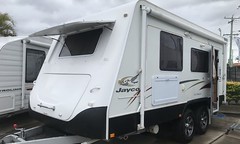
Self Contained Motorhome Or Sleeper Van? Choosing The Right Vehicle For Your New Zealand Holiday

By Adrian Tonks

Finding the right vehicle for your holiday can be a daunting prospect, with many choices and differing terminology. Review the options and discover the pitfalls in choosing a rental vehicle for independent travel through New Zealand.

With a myriad of labels used to describe vehicles for the independent traveller, such as Campervan, Camper, Motorhome, Motor Home, Winnebago, RV, Combi, Kombi, Class-A, Class-B and Class-C to name a few, choosing the right kind of vehicle can be confusing from the outset.

The common terms used in New Zealand are Camper or Campervan, Motorhome and Sleeper Van. Campers are vans that have been converted for independent travel and contain similar features to their larger cousin, the Motorhome. A Fiat Ducato or Ford Transit style of van is popular for these conversions and the finished product is a modern, easy to drive vehicle.

Motorhomes on the other hand have a cabin built on a van or light truck chassis. Typically constructed from fibre glass, with alluminium skin over plywood occasionally used, the cabin is wider than the chassis base making Motorhomes more spacious. Driving is reasonable straight forward and models available for rental only require a standard driver’s licence.

Motorhomes and Campervans are self-contained and support you with the comforts of home, albeit miniaturised. Self-contained vehicles have a sink, hob or cooker, fridge, toilet and shower. The level of self-containment varies but there is a New Zealand Standard (NZS 5465:2001) developed by the New Zealand Motor Caravan Association (NZMCA), a body that represents private motorhome owners. The rental motorhome companies are starting to take their vehicle though the certification process and it is worthwhile enquiring about this as you research rental options. The essence of the self-containment standard states a vehicle must be designed to completely meet the ablutionary and sanitary needs of the occupants for at least three days, be equipped with water storage tanks for drinking and cooking and have waste water holding tanks.

[youtube]http://www.youtube.com/watch?v=1xiB33gtP9g[/youtube]

A Sleeper Van is a Camper that does not meet the self-containment criteria. Beware that this definition is not industry wide and it is not uncommon for a Sleeper Van to be referred to as a Campervan, simply because the vehicle is a van rather than a car. Purpose built Sleeper Vans are frequently constructed from people movers, such as Toyota’s offering, and from station wagons. Because of the type of vehicle used in construction it is uncommon to able to stand. Sleeper Vans can have some elements of self-containment, such as a cooker and small refrigerator allowing lunch or a light meal to be made while out on the road. Sleeper vans, like campers, are easy to drive.

What makes for the best independent traveller vehicle comes down to personal preference and a balance between cost, comfort and the type of holiday you’re after.

Perhaps the best place to start is deciding where you want to overnight, as this impact on the type of vehicle that will be suitable and also affects your budget. There are four options for overnighting in New Zealand.

1) Native Parks – is a network of rural properties and businesses that welcome travellers. You can stay on these properties free of charge, meets the local people and see a bit of their lives. A great way to see NZ beyond the beautiful scenery and they are not crowded. There’s a real mix of people involved from large wineries to small artist plus action and adventure like diving, limestone caving and horse trekking. You do need a self-contained motorhome/campervan. Check out http://www.nativeparks.co.nz/

2) Campgrounds – there are a large number of campground that follow a traditional format. In recent years the number of campgrounds has been in decline, so they can get very busy in peak season (Christmas they are at capacity through to the end of February), so it is advisable to book ahead. The following sites might help www.topparks.co.nz or www.familyparks.co.nz

3) DoC Campground (Department of Conservation) – typically have fewer facilities than other established campgrounds, so a self-contained motorhome / campervan would make life more comfortable. They are often in very scenic locations and cheaper than privately operated camping grounds. Same situation occurs after Christmas as with other campgrounds. See http://www.doc.govt.nz/Explore/003~Huts-Cabins-and-Campsites/Conservation-Campsites/index.asp

4) Free / Wild / Freedom camping – just parking up wherever. Rarely permitted in much of NZ, though you can get away with it if you’re sensible. Rules on freedom camping vary from district to district. The Native Parks guidebook highlights what’s permitted in each district. In general terms do not overnight in “No Camping” areas or near established camping grounds. It is advisable to be at least 10km from the urban boundary of any town or city. New Zealand is a pretty safe place but because wild camping is in public spaces you are exposed to some risk. To free camp a self-contain motorhome/camper is a must.

If you prefer staying in camping grounds, but don’t want the hassle of a tent a Sleeper Van may be a good fit. Do bear in mind that an established camping ground costs between $30 – $40 NZD per night for a couple, so it is possible for a Sleeper Van to cost more than a self-contained vehicle with the use of some of the options above on the odd night. If you do want to get away from it all, or you’re looking for more comfort, a self-contained vehicle will be the way to go.

Past the obvious vehicle rental costs things to consider are whether extra charges for one-way rentals apply, what the insurance options are and whether road user charges for diesel vehicles is included.

The easiest measure of comfort is size, though it is not the full story. There are many other considerations for comfort and again it comes down to personal preference. Do you need to make up the bed each night? Is there space to have some time out from your travelling companion(s)? Is there an awing to provide shade? How about appliances like microwave and air conditioning (NB power hungry appliances only work when the vehicle is connected to mains power)? These can be found in smaller vehicles so size shouldn’t be the only criteria when it comes to measuring comfort. If you are tall do ask about the ceiling height.

So there are a number of things to consider when determining what will be the right vehicle for your holiday. As with any purchase it is worth seeking out a company that backs up their vehicle with service and professionalism. These won’t be hard to find, but if you are looking for a starting point there are a few suggestions on the Native Parks website.

About the Author: Adrian Tonks is the founder and CEO of Native Parks (nativeparks.co.nz/) – a NZ business providing free overnighting sites for visitors touring New Zealand in rental campervans and motorhomes.

Source: isnare.com

Permanent Link: isnare.com/?aid=97965&ca=Travel

eBay removes Canadian town’s listing of sperm whale carcass

Thursday, May 8, 2014

Citing violations of its policy regarding “Marine mammal items”, eBay terminated an online listing on Monday by the town of Cape St. George, Newfoundland and Labrador, Canada, for a 40 ft (12 m) sperm whale carcass reportedly beached upon its shores about a week prior.

With an initial asking price of 99 cents, bidding for the carcass reportedly rose to C$238.03 within 15 bids. Reports variously state the final price of the whale, prior to the removal of the listing from the auction site on Monday at about 2:30pm, was C$2,025 or C$2,075. Listed in eBay’s “really weird” category, the carcass was considered by eBay to be an example of “items made from marine mammals regardless of when the product was made”, which are prohibited as per site rules.

Following a council meeting on Sunday in the town of 950 residents, Cape St. George’s mayor, Peter Fenwick, put the whale up on the auction site in a bid to have it removed from the town’s premises, citing a lack of cooperation from provincial and federal government officials on the matter. “It’s your problem, you solve it”, Fenwick recounted to The Globe and Mail (TGaM) as the response he received from them. Apart from eBay, Kijiji was also suggested as another avenue by which to sell the carcass.

Fenwick told CTV News, several years prior another sperm whale measuring 15 ft was beached in the area, but disappeared without incident, an act Fenwick attributed to be the work of Fisheries and Oceans Canada. “This time”, he remarked, “the authorities have told us that it’s our whale, it’s our responsibility to get rid of it.”

On putting the carcass for sale, Fenwick remarked, “We knew we had to do something with it and this seemed to be the least expensive way of disposing of it.” In a news release, Fenwick highlighted a possible use for the carcass, particularly its bones. “The 40 foot sperm whale will make a spectacular exhibit once the fat and muscle is removed, and the town is asking museums and other organizations that could use a whale skeleton to contact the town for further details.”

On retaining the whale himself, Fenwick stated, “As a town we would dearly love to keep the whale and put it on exhibit in the town but the cost of such a venture would be hard to justify.” Fenwick told TGaM the whale was “in half decent shape”. “This one looks like it died very recently and hasn’t decomposed much”, which Fenwick suggested elsewhere was due to the whale’s present location, partially submerged in near-freezing water. However, Fenwick noted its close proximity to a residential area, saying homeowners who lived there were “very interested in seeing the whale gone.”

eBay was not the only organization who barred the sale from taking place. “We also got threatened by the federal department of the environment, and told to pull the ad off or they would prosecute us”, said Fenwick on the opposition he said he received from Environment Canada, which viewed the sale as contravening a federal act designed to protect endangered species. “I received a call from the federal department of the environment saying that you’re not allowed to sell any parts of sperm whales, even if they’re dead.” he added. “So I said, ‘Oh that’s very good, I’m glad to hear that, now can you send somebody over here to get rid of it for us?'” Fenwick’s request was met with a negative response from Environment Canada.

“They’ve got to sort it out somehow. The uncertainty means it just sort of sits there and rots.” Once decomposition sets in, Fenwick remarked the carcass would become a “real nuisance”. “I don’t know if you’ve ever seen a whale that’s been rotting on the beach for a couple of months — actually sometimes you can’t see it for the clouds of flies around it — but you can smell it for about a mile”, he added.

On finding alternate means to dispose of the carcass, Wayne Ledwell, a member of Newfoundland’s Whale Release and Strandings, suggested the whale be towed out to a remote area. “They need to do that right away, when they come in and they’re fresh,” said Ledwell. “No one wants to go touch them … everything becomes gooey and slippery and you can’t stand up on the whale and it gets on your boots and you can’t get the smell off and then you go home and the dog rolls in it and you get it in your kitchen and you curse the whales, and you curse the government and … it becomes a mess.” Fenwick said they’d considered the idea, enlisting a local fisherman who, however, judged his engine too small for the job.

Previously, blue whale carcasses washed ashore in the towns of Trout River and Rocky Harbour, located about 150 km further north, and were taken by Royal Ontario Museum for preservation of the skeletons. Fenwick suggested the sperm whale carcass in his town might also meet a similar fate, as the sperm whale’s status as the largest toothed whale might prove to be a drawing attraction for such a facility.

Regarding what he plans to do next with the carcass, Fenwick said “If we’re not allowed to sell it, we’re willing to drop our 99 cent price down to a zero.” He said he hoped some eBay bidder stays interested in the whale. “We’ll be glad to talk to them about giving them the whale. We’re hoping that’s not illegal.” He also said he hoped the publicity from the town’s predicament, which garnered national attention, and its unusual means of finding a solution, would draw in someone interested in taking the whale off his hands at their own expense.

Should the whale fall under new ownership, Fenwick advised it be moved away from the town to a beach devoid of people, and the blubber left as food for seagulls, insects, and other predators. He estimated “It’ll probably take a year or so to get down to the skeleton.” As monetary gain was reportedly not what the town cared about, Fenwick was willing to offer the carcass for free, though one report noted money raised from the listing could have gone towards the building of a skate park.

The listing on eBay, as put up by Fenwick, read:

This 40 foot sperm whale rolled up on the beach last week. The actual seller is the town of Cape St. George which is responsible for disposing of it before it starts to decay. Once the fat and flesh is removed you have a spectacular 40 foot skeleton of the largest toothed whale in the world, great for museums and other attractions. To prevent it rotting in the town it can be towed to isolated beaches on the Port au Port Peninsula to allow the seagulls and other birds to remove the flesh. Call 709-644-2290 or 709-649-7070 for more details.

Please note the successful bidder will have to remove the whale within 30 days

Retrieved from “https://en.wikinews.org/w/index.php?title=EBay_removes_Canadian_town%27s_listing_of_sperm_whale_carcass&oldid=3827875”